
These are our top picks for the best lock-picks money can buy.
You just spent nearly a thousand, if not thousands, on a new bike. It is fast, sleek, convenient, and definitely an investment. Unfortunately for you, it’s also a rolling magnet for thieves, especially in crowded cities.
One study found that bike thefts have increased 15% in 2025. Today, a cheap cable lock isn’t much more than the proverbial bow on your bike for thieves. To keep your ride safe, you need to understand the new security rules.
The Evolution of Bikes & Security

E-bikes are heavier, more expensive, and fitted with motors, batteries, and other components that are worth more to a thief. The increased worth of these bikes has led to an “arms race,” of sorts, between lock manufacturers and thieves.
Thieves now use cordless angle grinders. These tools can chew through the average steel lock in a matter of seconds. As a result, the industry has had to evolve its manufacturing processes. Peter Vevers, Marketing Manager at Allegion, the parent company of security brands like AXA, Kryptonite, and TRELOCK, sat down with Ride Review to tell us what makes a good bike lock secure, and how.
Unlike traditional road bikes, e-bikes and cargo bikes have much thicker frames and batteries. It is about more than just shackle thickness. When designing chain or folding locks, the length of the lock and the security level must be perfectly balanced with the frame size, tube thickness, and the overall value of the bike,” says Vevers.
For your convenience when buying, and based on Peter Vever’s answers, we’ve ranked locks by budget, weight, security, and ease of storage.
Busting the Jargon
First off, we need to talk about the “Sold Secure” rating system.
Sold Secure is an independent organisation that tests locks. They then attack a lock with various tools to test their durability. The locks are then rated as the following, from least to most secure: Bronze, Silver, Gold, and Diamond.
When shopping for your next e-bike lock, look for the following 2 labels. They’re pretty much the only things that matter.
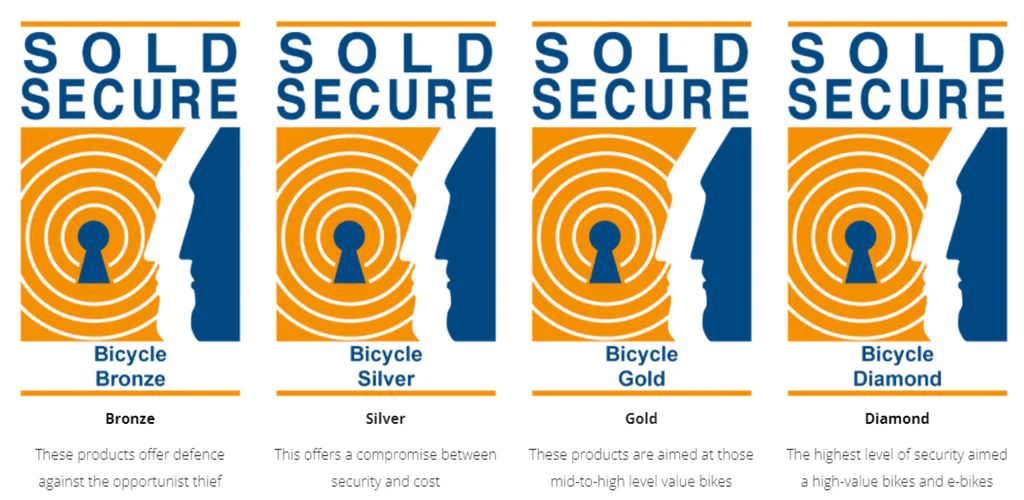
Sold Secure Diamond This rating is the “anti-grinder” standard for locks. In the past, a simple “Gold” rating was the best you could get. However, power tools have left most “Gold” standard locks obsolete. However, a “Diamond” rating implies that the locks can survive a sustained attack from an angle grinder for several minutes. Ideally, that is long enough to attract some serious attention to curb the effort. These locks employ materials like ceramic graphene to deter the thief’s cutting discs.
Sold Secure “Powered” Sold Secure rebranded its motorcycle lock division to include e-bikes. The aptly named “powered division,” is built for heavy, expensive machines and is tougher than standard locks. A pedal cycle Diamond lock is roughly as durable as a Powered Gold lock. For the ultimate protection, seek out Powered Cycle Diamond locks. This rating tests the locks against professional 36V angle grinders. The locks must withstand the tools’ attacks for at least 90 seconds. Many high-end e-bike insurers now require the powered diamond rating to cover a theft claim.
How are they tested? Far from normal, to say the least. These locks face barrages like liquid nitrogen and butane torches. Such technologies, which the average thief will not have access to, should be a sufficient benchmark for the average bike lock, estimates Vevers.
He adds, “Locks certified by authorities such as Varefakta undergo rigorous freeze testing, followed immediately by attack tests identical to those performed at room temperature. A lock only receives certification if it passes these extreme-condition tests.”
With that said, here are our top picks for your next bike lock in 2026.
Miniscule but Muscular: The Kryptonite NY Fahgettaboudit Mini
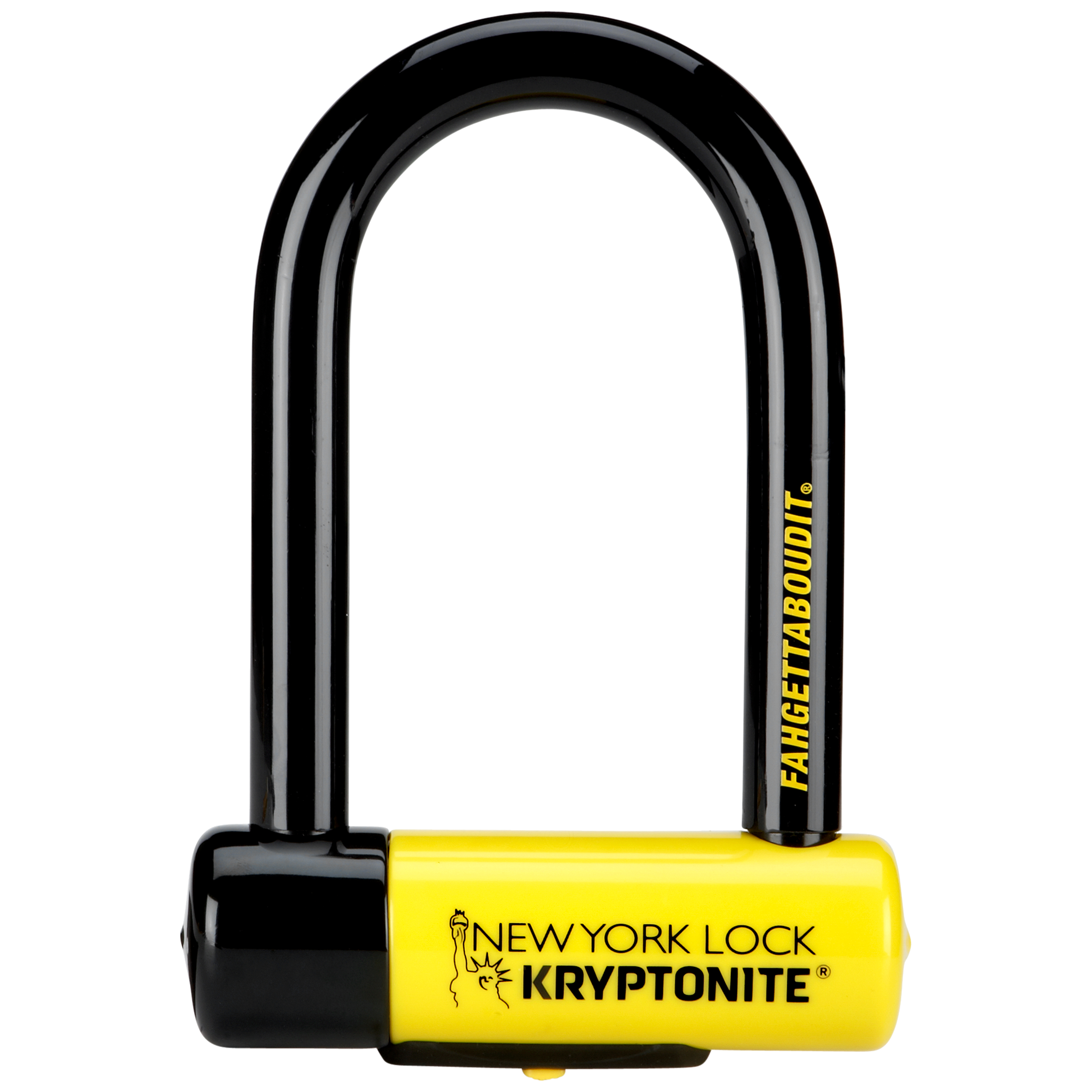
This smaller e-bike lock is Kryptonite’s option for consumers who want the safety of a bulky lock without the hassle of carrying it around. It is rated Sold Secure Pedal “Diamond” and Sold Secure Powered “Gold,” which isn’t as high as we’d like, but good enough for regularly used and monitored parking areas. The lock itself is drill and pick-resistant, and can withstand an angle grinder for significantly longer than other locks of its stature. It weighs a mere 2 kg (4.5 lbs) and is 3.25 inches wide, which should cover your average slim city e-bike, but definitely won’t cover your average thick-framed eMTB.
To combat modern threats, Allegion brands such as Kryptonite have relied on materials science. Vevers says, “A prime example of our innovation is the Kryptonite Diamond Standard: it features a 26mm double-layered steel shackle with a diamond coating, making it exceptionally resistant to angle grinders. We are so confident in this technology that we offer a 5-year anti-theft protection guarantee.”
The Most Popular Pick: Kryptonite New York Legend Chain 1515
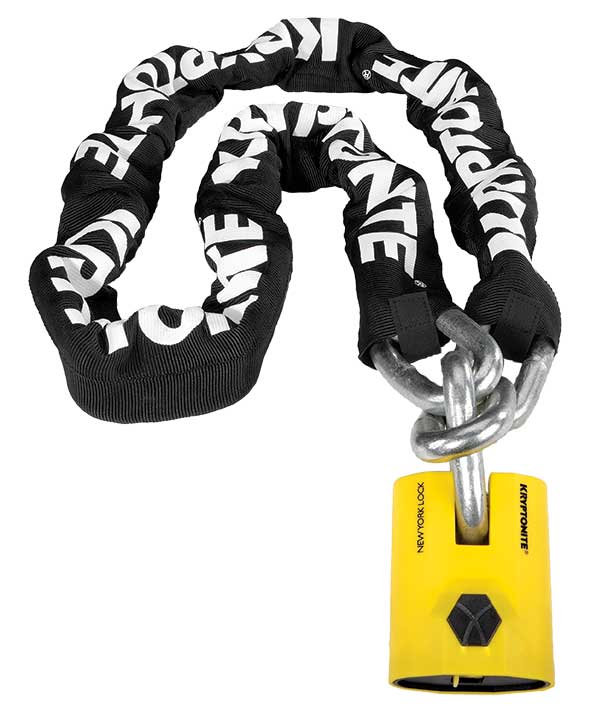
This bike lock is made mostly of steel, with manganese content between 11% and 14% for added strength and wear resistance. This best-in-class lock will set you back between $220 and $250. As far as locks go, it is quite hefty at 6.9 kg (15.2 lbs) and Sold Secure rates it as “Powered Gold.” Its heft and density make it hard to leverage, yet it easily fits around the average pole or stand. This lock is also rated 5 stars in the Dutch ART-Rating system.
The Premium Lock: LITELOK X3/ Moto
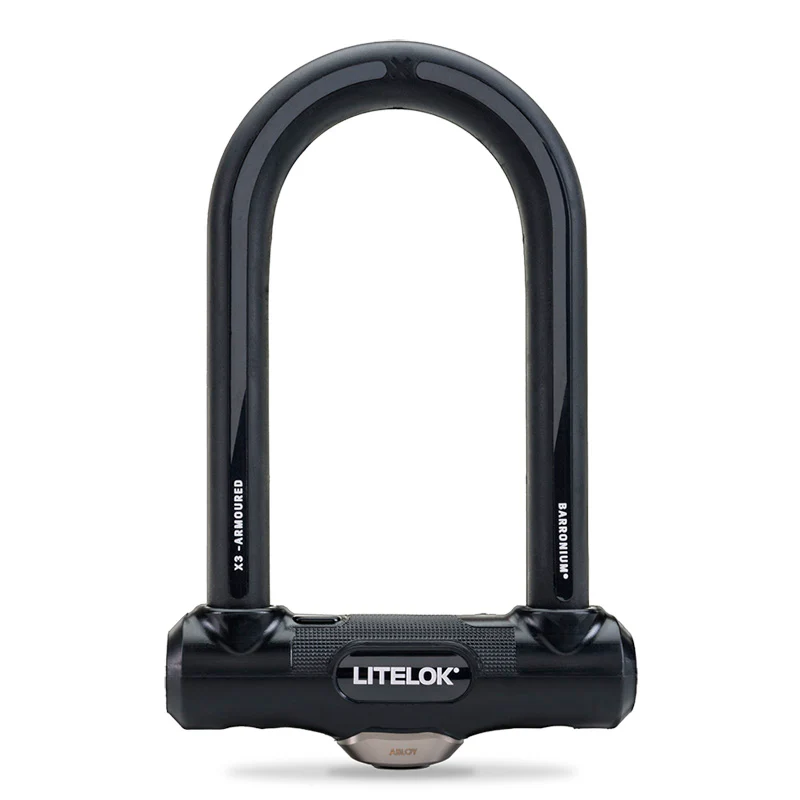
If you’re looking for a flagship bike lock and want all the durability the rugged Kryptonite has to offer, but don’t want all of its heft, look no further. The Litelok X3 is available in both a regular and a Moto variant, with the latter specifically designed for thicker, denser frames. Both are priced at £279.99 and made with “Barronium,” LITELOK’s proprietary blend of metal and ceramic, which they claim is 20 times more resistant to angle-grinder attacks. This lock is rated a Sold Secure Powered Diamond, making it as durable as the Kryptonite. It is notably lighter, at 2.1 kg (4.6 lbs) and is rated ART-4 by the Dutch authorities. LITELOK’s X3 page features several CCTV videos showing users’ bikes withstanding attacks when equipped with the X3.
The Toughest Lock: Hiplok DX1000
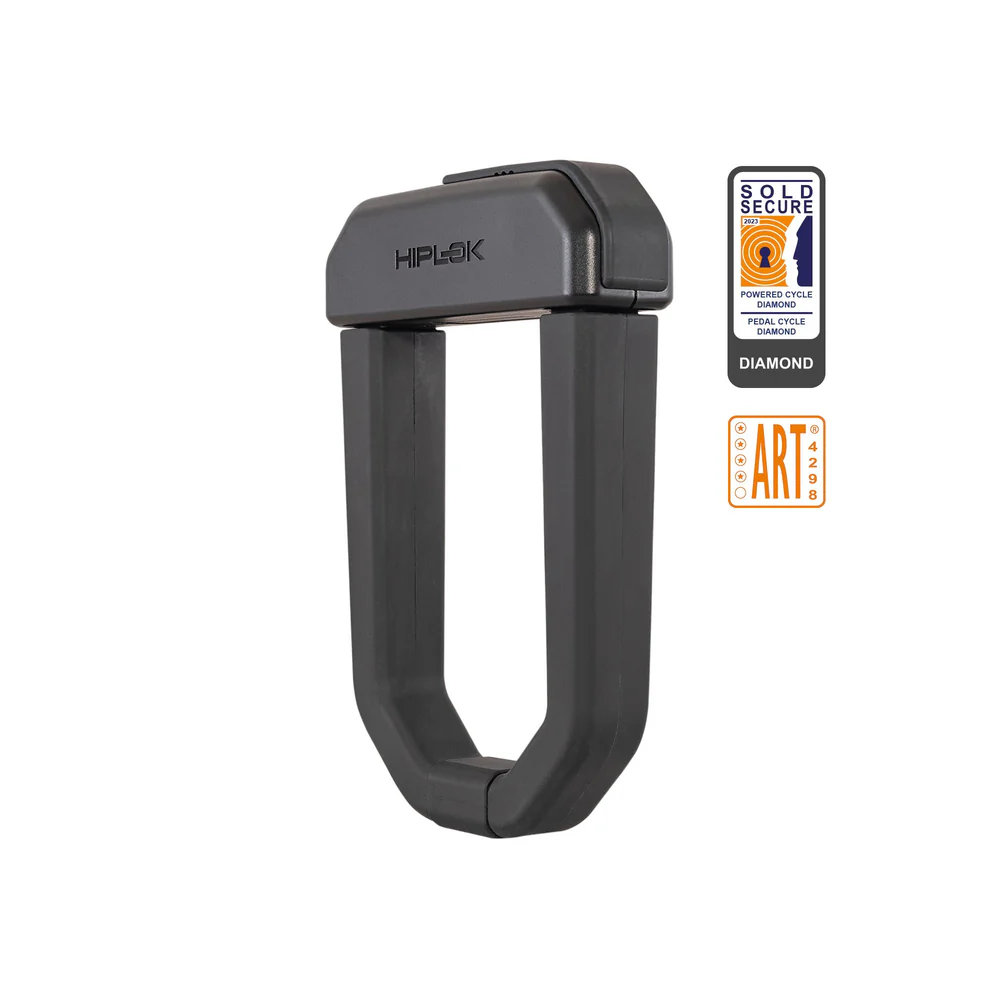
The Hiplok DX1000 offers a feature that no other bike lock maker claims to have - it specifically destroys angle grinder discs if you use them on this lock, or the rest of Hiplok’s D series. This bike lock is engineered with Graphene to increase hardness and will set you back £299.99 in the UK. It weighs 2.75 kg (6 lbs) and is also “Sold Secure Powered Diamond”- rated, the highest rating. Much like the Litelok, the DX1000 is also rated ART-4 by the Dutch. What’s more, if you live in or dock your e-bike in a place without as much security as you’d like, the DX1000 is compatible with Hiplok’s lock-arms, which are drilled and affixed to the wall or ground. Bike locks then attach and lock onto these arms to keep your bike safe for extended durations.
Heavy Urban Lock: ABUS Granit 2500 D
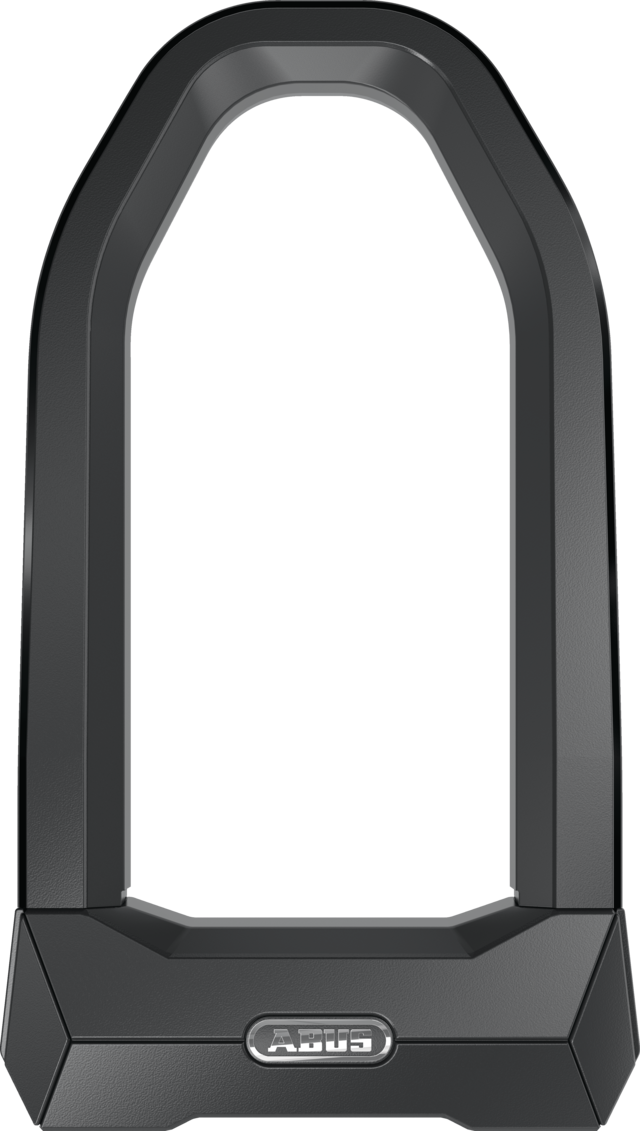
Although Abus has chosen to really hammer in the toughness of this lock by calling it the Super Extreme 2500 D-lock, we’ll stick to calling it the 2500D. Priced between £270 and £290, depending on where you buy it from, this lock is Abus’ response to both angle-grinders and to heavy-duty urban choices from their competitors. The 2500D is made of steel and hardened with tungsten carbide for added toughness. It weighs 2.2 kg (4.9 lbs), and its shackles destroy angle grinder discs. Its bulk makes it ideal for heavier e-bikes, but it will still do the trick for your lighter, sleeker e-bikes, too. This lock is rated Sold Secure pedal and powered “Diamond,” making it as durable as it gets. For £10 more, Abus sells a USH bracket for your e-bike, so you don't have to worry about carrying your bike lock or hearing it rattle when you’re on the go.
Affordable Durability: ONGUARD 8590
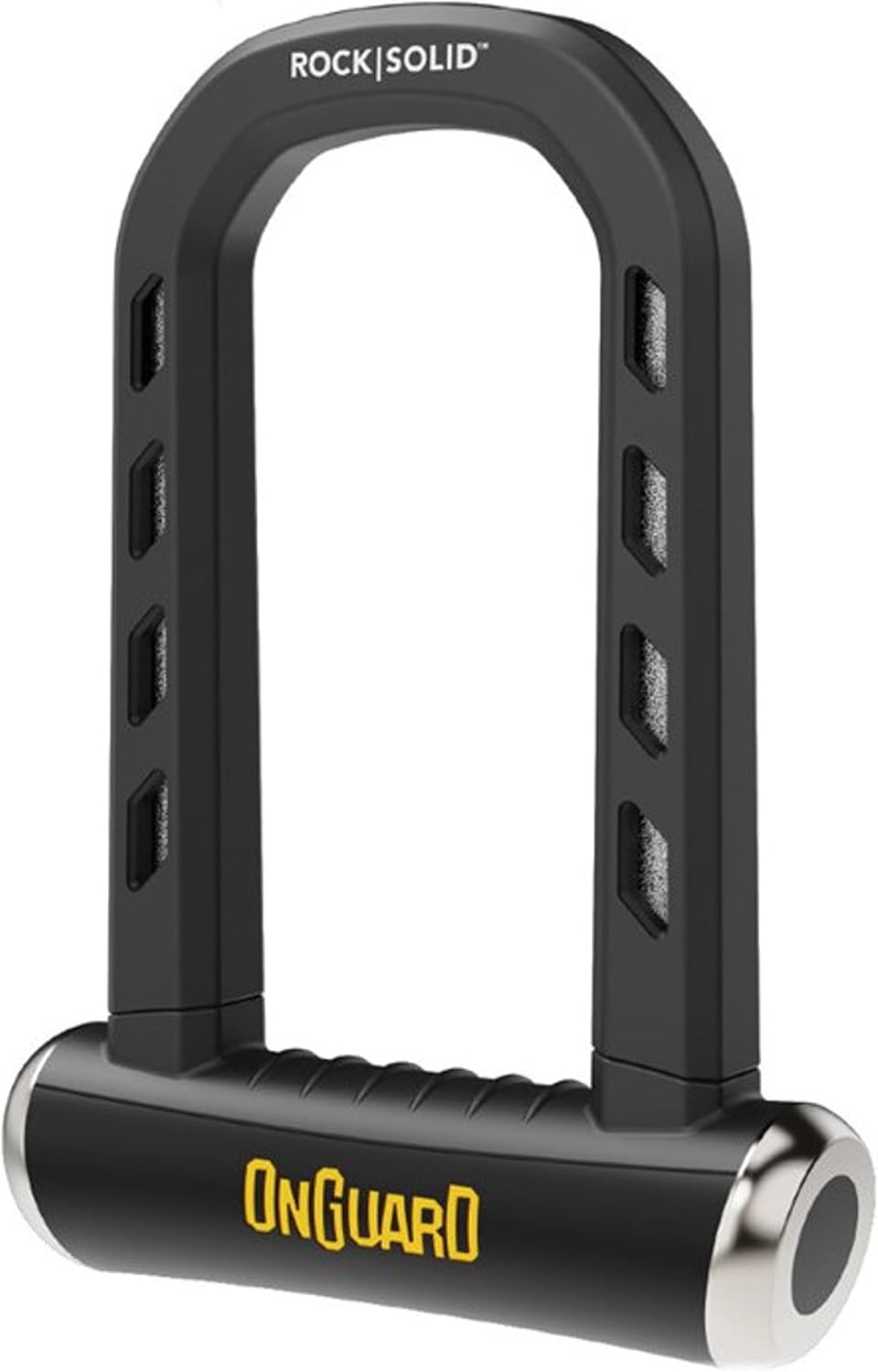
The Onguard 8590 is not trying to be a flagship or premium bike lock. This lock works for people in relatively low-risk areas, or for someone trying to save every gram they can on their bike rides, at the cost of a bit of safety. Priced between £165 and £180, depending on your retailer of choice, this lock is rated diamond in the pedal cycle category, which roughly translates to a gold-rated powered bike rating. This lock comes with a ceramic coating to break down cutting discs on an angle grinder, which it does not do for very long. The lock weighs 1.3 kg (3 lbs), and Magnum, the parent company behind OnGuard, claims it is also resistant to lock-picking.
Affordable Premium: The Litelok X1/ Moto
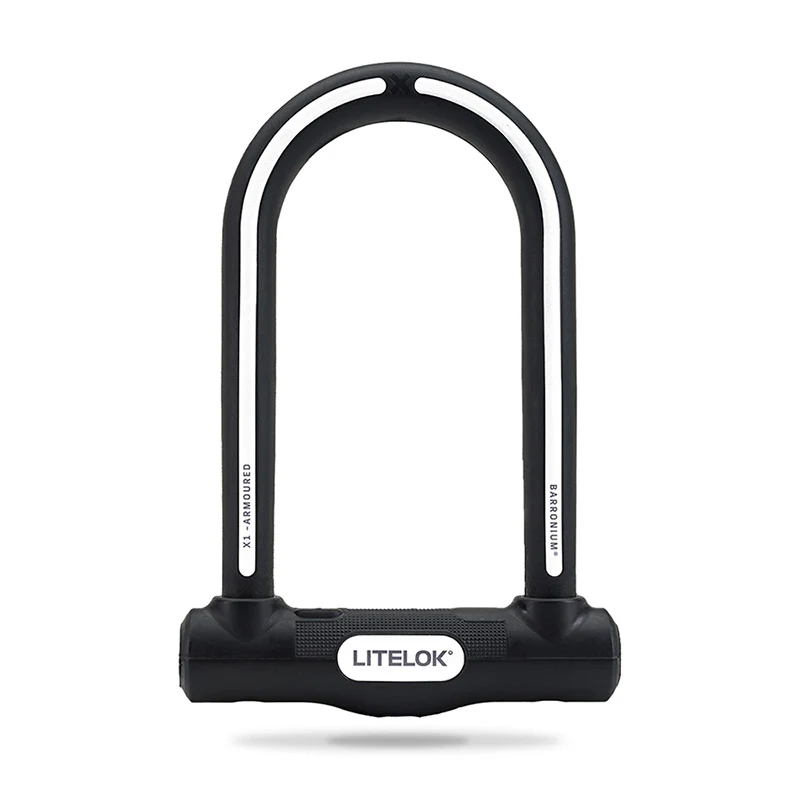
The Litelok X1 is the proverbial younger sibling to the premier Litelok X3. It packs a similar punch, too. The X1 costs £169.99 on Litelok’s website and is composed of the same Barronium alloy as the X3 for increased durability. The X3 is narrower and longer, meant for slightly thicker frames, but the X1 is wider, meant for your average e-bike. The X1 can fend off angle grinder attacks for about half as long as the X3, which is still relatively high at approximately 5 minutes. Use this lock if you’re an urban commuter who has a safe, monitored place to stow away your e-bike, instead of at a public place. The X1 is Sold Secure Powered “Diamond”- rated, which is best in class. It weighs 1.7 kg (3.7 lbs), which is lower than the X3, but comes with similar features.
These are our top picks for the best lock-picks money can buy. One final tip: Avoid generic combination locks. Sites like Amazon or Temu often sell these under the banner of “heavy-duty.” We cannot stress this enough: This is a lie. The words heavy duty are neither quantifiable nor verifiable. Any lock purchased en masse can be resold to you via a dropshipping operation with the word “heavy-duty” tacked onto them. They can be cut through like butter and sometimes have universal keys. They offer no security for your e-bike, and you should avoid them like the plague.
E-bikes need upgrading. So do locks. What happens when your e-bike outgrows your lock? Or you simply need a new lock? Vevers assures that “materials are largely recyclable. Hardened steel and Zamac can be recycled infinitely. To improve the recyclability of our polymers, we have begun coding the plastic components so they can be easily identified during the sorting process. The primary challenge lies in the separation of these robustly assembled elements, which is a process we continue to evaluate as part of our commitment to the circular economy.”
While some could say that lock engineers lose sleep at night over evolving thieving methods and lock-breaking methods, Vevers assures us that Allegion’s engineers can get a good night’s sleep. “Allegion has invested in state-of-the-art testing laboratories at each of our sites to apply the most advanced testing procedures. Our products meet the quality criteria of the world’s leading testing authorities.”
Like what you saw? Check out some of our other guides here. We cover everything from Amazon finds to the best e-bike for different budgets.